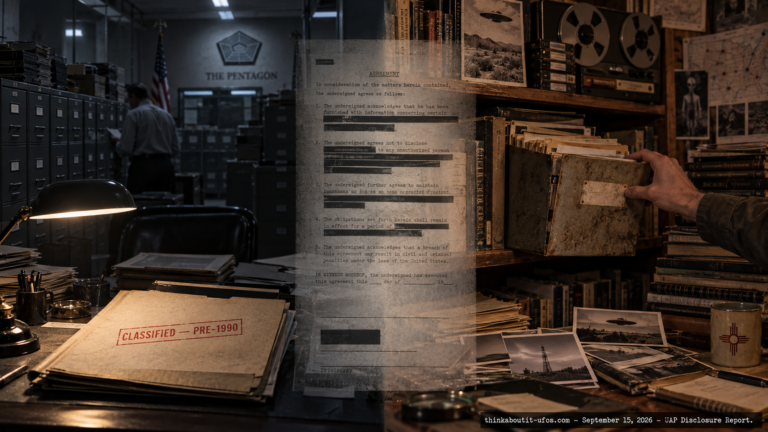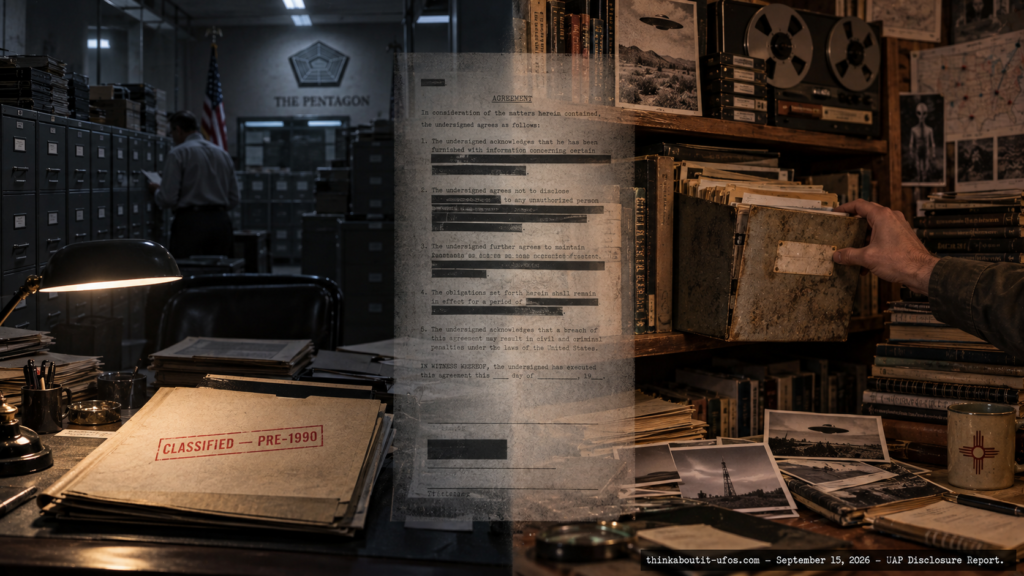
The Pentagon's AARO office is seeking access to NUFOHRC, the private New Mexico archive holding Dr. J. Allen Hynek's personal UFO files, September 2026.
THINKABOUTIT-UFOS.COM — BREAKING UAP DISCLOSURE REPORT
AARO Moves to Buy the World’s Largest Private UFO Archive
Published September 15, 2026
The Pentagon just admitted something the private UFO research community has known for decades: the government’s own files aren’t the whole story. On September 2, the All-domain Anomaly Resolution Office (AARO) moved to issue a sole-source contract for access to the National UFO Historic Records Center (NUFOHRC) — a New Mexico-based nonprofit that quietly built what a War Department contracting notice now calls North America’s largest private collection of UAP historical records. AARO specifically wants the pre-1990 material, and the reason why matters: Congress has ordered the Pentagon to produce a complete historical accounting of the U.S. government’s UAP involvement back to 1945, and the government’s own archives, by its own admission, aren’t enough to do it.
What NUFOHRC Actually Holds
NUFOHRC was built by UAP historian David Marler, who spent years personally accumulating books, journals, newspapers, audio and video recordings, photographs, and physical artifacts spanning more than 75 years of UFO history. Prominent early researchers — and their families, after they passed or retired — entrusted him with their personal archives rather than let the material scatter or disappear. Over the last six years, Marler’s collection absorbed several major legacy troves, including the complete historical files of one of the earliest civilian scientific UFO research groups founded in the 1950s, and rare personal files that once belonged to Dr. J. Allen Hynek — the astronomer who worked Project Blue Book for the Air Force and later became the field’s most credible scientific voice.
Per the contracting notice, a War Department official told reporters that “NUFOHRC possesses the world’s largest private collection of UAP-related historical records, including hundreds of thousands of unique case files that exist exclusively within its archives and are not available in any other public or private repository,” adding that “market research conducted to date indicates that no other organization possesses the historical depth, volume of unique records, and specialized analytical expertise to meet the government’s minimum needs.”
Read that again. The Pentagon is telling Congress, on the record, that it cannot fulfill a federal mandate to document its own UAP history without buying access to a civilian archive built by researchers the government spent seventy years keeping at arm’s length.
Why This Is Happening Now
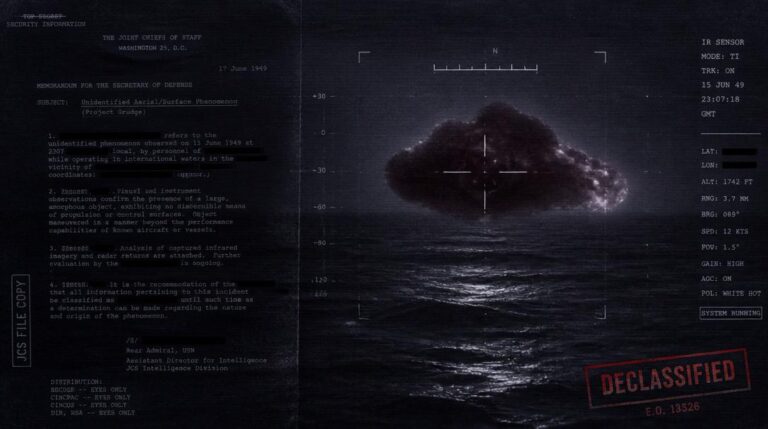
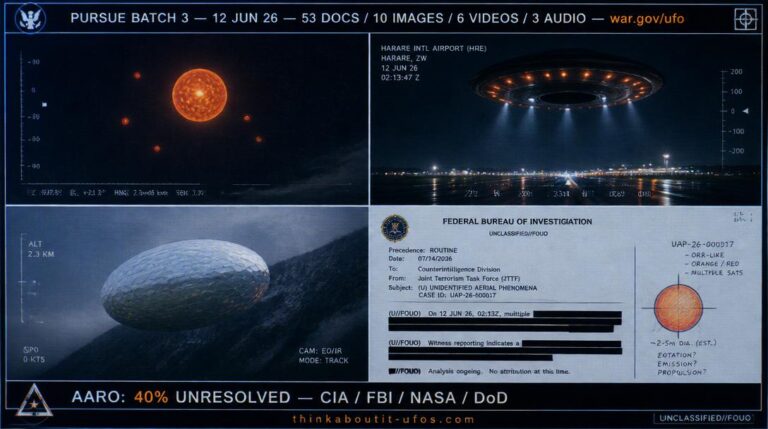
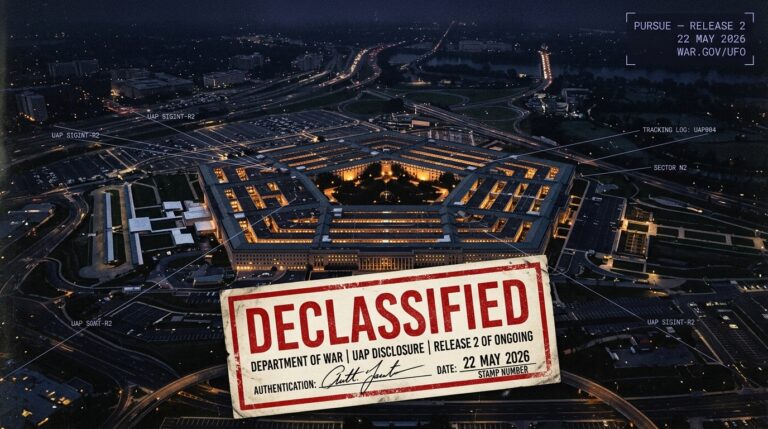
This didn’t come out of nowhere. It’s the latest step in a chain that started with the 2022 NDAA, which stood up AARO in the first place after mounting public and congressional concern over escalating domestic UAP incidents. The fiscal 2023 NDAA ordered AARO to compile a full historical record of the government’s UAP-related intelligence and military engagements dating to 1945. The fiscal 2024 NDAA went further, creating the UAP Records Collection at the National Archives and ordering every federal agency to review, digitize, and hand over its UAP-related material for eventual public release. And earlier this year, President Trump called for wide-scale declassification of government UFO and “alien” files outright — the same push that’s produced the five PURSUE file releases we’ve been tracking on this site since May.
The problem AARO keeps running into is the same one this site’s readers already understand: the historical record is a mess. Mid-20th-century military UAP documentation was heavily hidden, decentralized, and fragmented from the start, and what survives in usable form today often survived only because civilian researchers and private organizations kept it after official government projects wound down or got buried. Contracting with NUFOHRC is AARO’s way of admitting that the missing pieces of its own history are sitting in a private New Mexico archive, not a government vault.
The Fine Print
The proposed deal is a one-year base contract with four one-year options — a multi-year subscription giving AARO digital access to NUFOHRC’s proprietary data, metadata, and existing analytical work. The Pentagon hasn’t disclosed the estimated cost. NUFOHRC itself didn’t respond to press requests for comment on the deal.
The Rest of the Picture — A Field Moving Fast
This announcement doesn’t sit in isolation. A few other threads worth tracking as of mid-September:
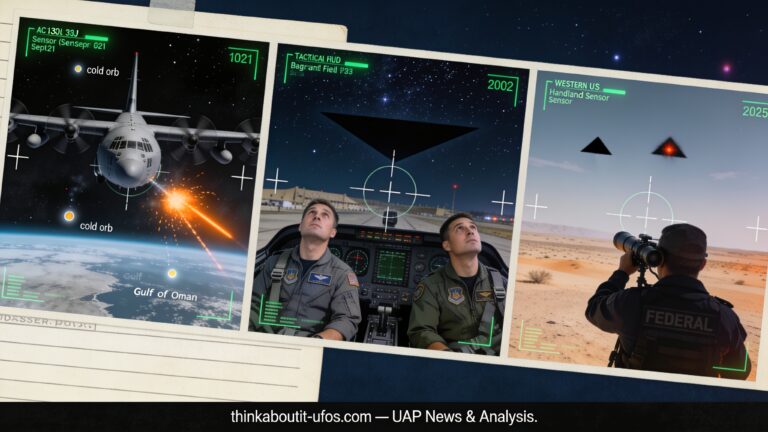
The fifth PURSUE release is out. As we covered here in August, the War Department’s fifth declassified UAP file drop included thermal video from two U.S. government special agents showing “black-hot” infrared anomalies, plus civilian witness accounts — including one person who reported three separate sightings within a five-hour window in the western United States, corroborated by a second, independently interviewed witness. Exact dates and locations in several files were redacted specifically to protect eyewitness identities and sensitive site information, not to obscure the sightings themselves.
A new science advisory council has formed. Harvard theoretical physicist Avi Loeb has shared early details on a new UAP Science Advisory Council, assembled specifically to help the government “resolve the UAP mystery” with a harder scientific footing than past efforts have had.
Congress is pulling on other threads too. Rep. Eric Burlison, R-Mo., has separately pushed for UAP records and assets held by MITRE dating back to 1930 — a reminder that AARO isn’t the only body being pressed to open its files.
Public trust keeps sliding the same direction. A new Scientific American-cited poll found 78% of Americans now believe the government is withholding UAP information, up from 71% thirty years ago in 1996. More people also report having personally seen a UFO than at any point in the 53 years the poll has run. Interestingly, the generational split cuts against the usual assumption: it’s Americans age 30-49 who are most likely to attribute sightings to alien spacecraft, while 18-29 year-olds are the most skeptical group, with 58% of them favoring a human or natural explanation for everything reported.
Why It Matters to This Site
We’ve said it before on this site in different words, and now the Pentagon is saying it too: the private archives matter. NUFOHRC’s collection — including Hynek’s own papers — isn’t a footnote to the official record. In AARO’s own stated assessment, it may be the record, or at least the only surviving path back to large parts of it. That’s the entire premise this network has operated on since 1996, and it’s worth sitting with the fact that the government just put a contract number on agreeing with us.
Sources: DefenseScoop (Brandi Vincent, Sept. 2, 2026); Newsweek; Scientific American; War Department PURSUE release materials.
About the Author